
Leaving Categories Behind with Kathryn Mockler
Multi-genre writer Kathryn Mockler, winner of the 2024 Victoria Butler Book Prize for Anecdotes, shares her take on the fluidity of genres, the freedom to invent, and the importance of believing in the veracity of your own experiences and stories—even in the face of doubt.
Interview by Yafet Alexander
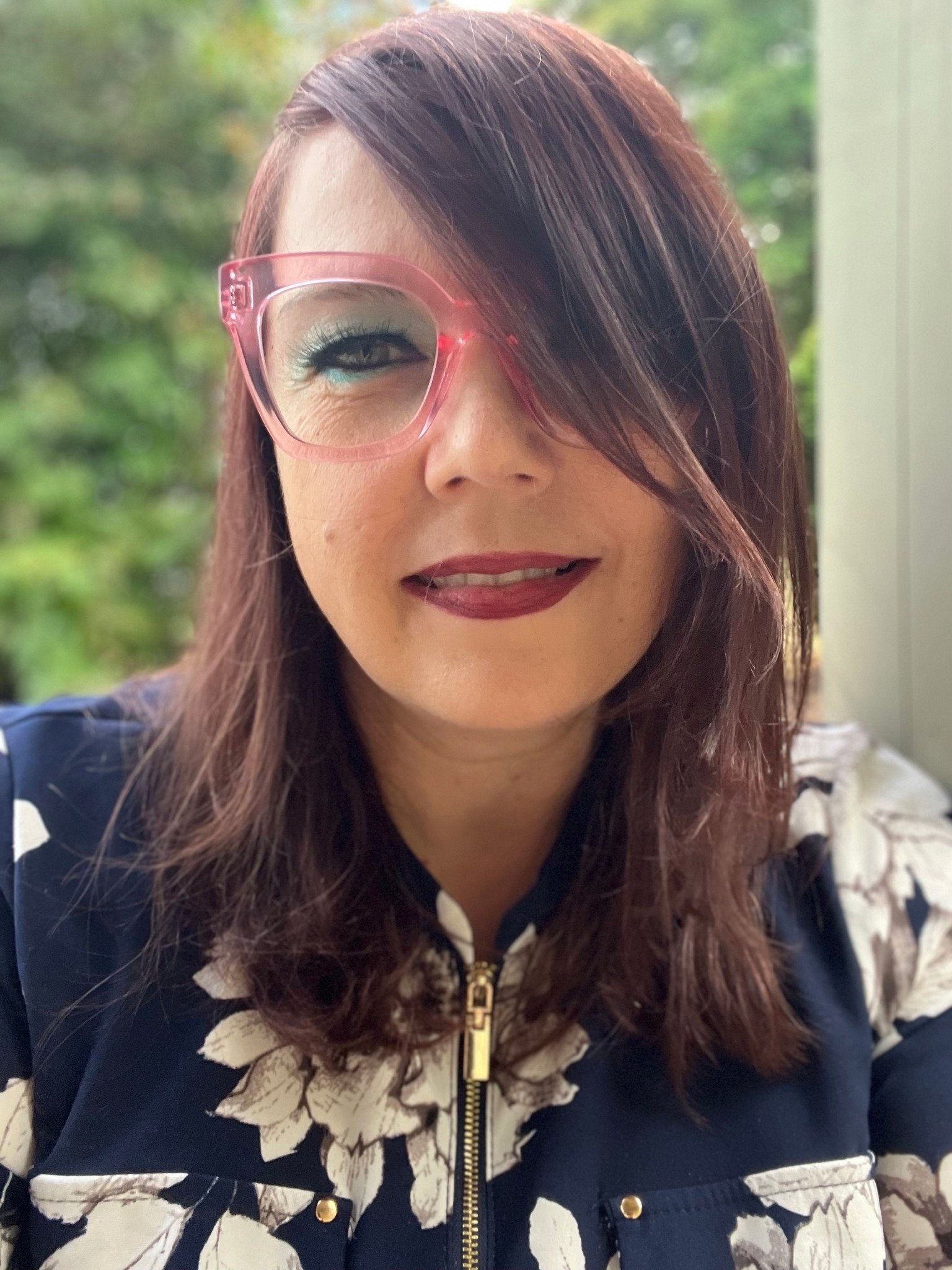
Photo of Kathryn Mocker by David Poolman
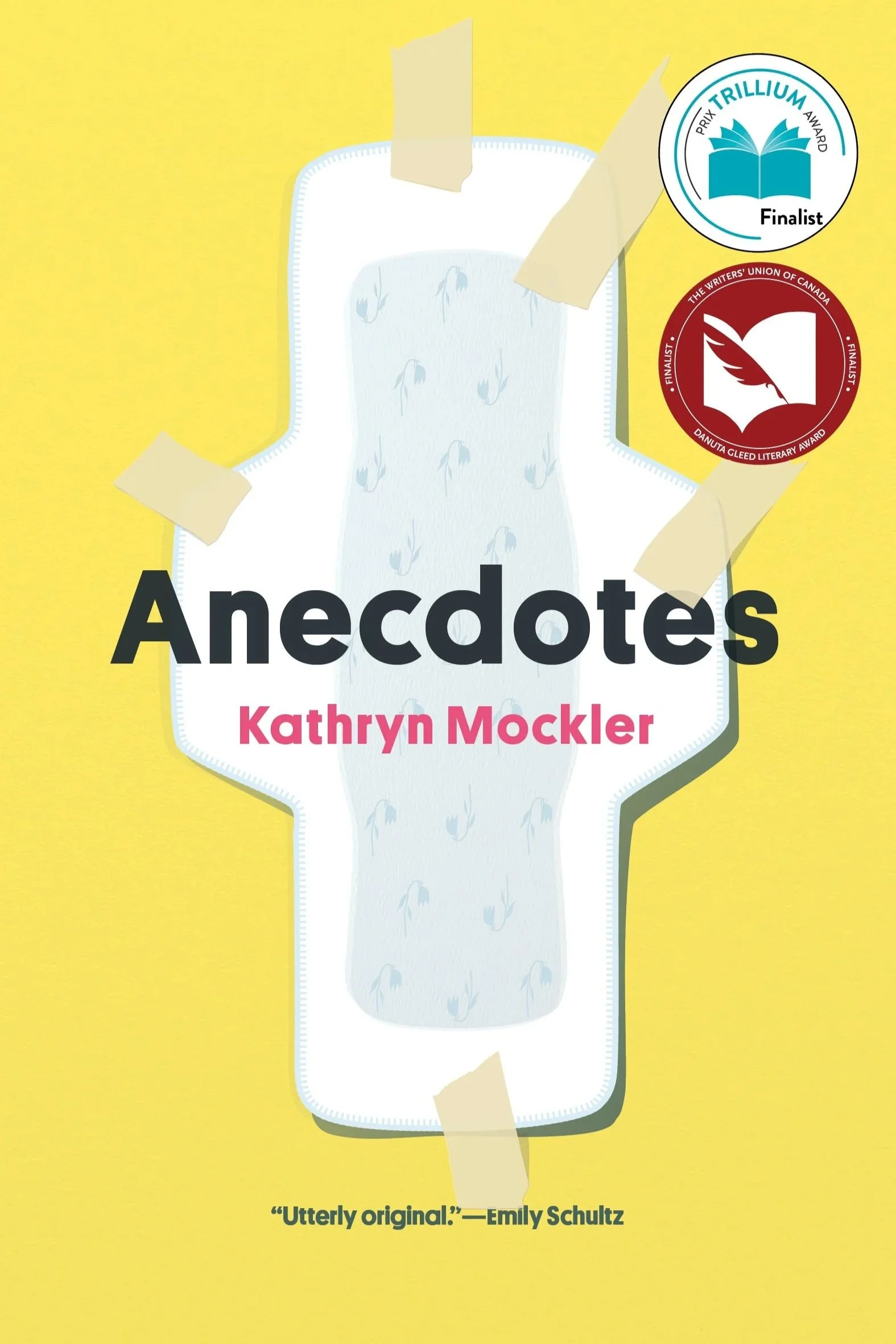
Anecdotes (Book*hug, 2023)
Kathryn Mockler is the author of the story collection Anecdotes (Book*hug Press, 2023), which won the 2024 Victoria Butler Book Prize and was a finalist for the 2024 Trillium Book Award, 2023 Danuta Gleed Literary Award, 2024 Fred Kerner Award, and 2024 VMI Besty Warland Between Genres Award. She co-edited the print anthology Watch Your Head: Writers and Artists Respond to the Climate Crisis (Coach House Books, 2020) and runs the literary newsletter Send My Love to Anyone.
Arrival: Kathryn, you immediately came to mind as the ideal interview subject for our upcoming issue of Arrival magazine because it's our first-ever flash-fiction issue. We are so curious to hear your definition of this subgenre: How do you define flash? (Other than the fact that it's short!)
Mockler: Short is the defining feature of flash fiction and perhaps writing that centres around narrative—although you can certainly have experimental, non-narrative flash fiction as well. For me, it really does just come down to length.
Arrival: Who are your favourite writers of flash fiction? Do you find that there’s little distinction between writing prose poetry and flash fiction? Is there a kind of fluidity between these genres for you?
Mockler: I have a flexible relationship with genre—in the same collection I might write what appear to be poems or very short stories or one-liners or micro plays, and many of these texts find their way into my video work eventually.
I’m less concerned with the categorization of writing (which for me is just for publishing and dissemination purposes), and I’m more interested in how narrative functions as a way to communicate an idea or feeling or how to analyze the way information is being packaged.
I’m also a screenwriter and have studied screenwriting, narrative storytelling, and screenplay theory. Understanding how narrative works, how stories can move people, and how they can be weaponized against people (as in the case of politicians), is important to me creatively and for gaining insight into how the world operates.
I am often influenced by different mediums and forms like art, theatre, film, video, and particularly by artists who use fragments, one-liners, and micro narratives.
I’m thinking of artist Kelly Mark’s 2013 video installation, Please Stare, where text videos with phrases like “I AM NOTHING WITHOUT YOU” and “NOTHING IS FOREVER” appeared on billboards in Regina, SK, and Jenny Holzer’s 1983 series Truisms T-shirts—one of which featuredNew York graffiti artist, Lady Pink wearing a T-shirt with Holzer’s Truism: “ABUSE OF POWER COMES AS NO SURPRISE.”
Playwright Suzan-Lori Parks is another influence for me in terms of her micro plays. In 2002, Suzan-Lori Parks wrote a play every day for a year and collected these in her aptly named book, 365 Days – 365 Plays. She repeated a similar project during the first year of the pandemic called Plays for the Plague Year.
Osama Alomar is a writer like Lydia Davis (another influence) whose works sometimes appear as fiction and other times as poetry. He often writes political micro stories/poems in the form of tales or fables and uses humour, juxtaposition, and absurdity to critique power, corruption, and oppression.
Other books that influence my short narrative nonfiction or autofiction include True Stories by Sophie Calle, Book of Delights by Ross Gay, Opacities by Sofia Samatar, and Weird Fucks by Lynne Tillman.
Arrival: Anecdotes is so uniquely its own work of art, both in how it’s been shaped and collated as a book, but also in how unapologetic it is about speaking certain truths aloud, especially in relation to the experiences we usually bury. I noted that many of the stories are written in the first person. Is it fair to say that at least some of Anecdotes is autofiction? Do you ever worry about people you know “seeing” themselves in your stories? Do you ever feel any fear about exposing yourself?
Mockler: Yes, it’s fair to say that there are autofictional elements in this book but not just in the section that appears most autobiographical (“We’re Not Here to Talk About Aliens”). I do like the term autofiction because it acknowledges that something is personal about the work, but there’s the freedom to invent, which I do liberally.
I see this type of writing not simply as writing my personal truth (which seems impossible), but very much an artform grounded in literary expression where the jumping off point happens to be something I’ve experienced. I’ve always done this in my writing. I just used to call it fiction.
Most recently and for the first time, I’m working exclusively in nonfiction, serializing a flash memoir about my mother’s year-long wait to get into a long-term care home. In this case, it’s important for me to acknowledge this project as fully nonfiction because it’s not just a personal story but an indictment of the way in which our politicians are deliberately eroding the public health care system and harming vulnerable groups to do it.
Others seeing themselves in my work is a good thing, a compliment. When #MeToo exploded, some women my age (Gen X) and older didn’t initially compute that what we had experienced (particularly as children and teens) was sexual harassment or abuse. #MeToo helped expose that. Around this time, I began to write a list of incidents and disturbing events I had brushed aside. There is where many of the stories from “We’re Not Here to Talk About Aliens” came from.
In terms of exposing myself…well that cat has been out of the bag for a while. Why do I write these things? I don’t really know because I don’t always feel in control of my creative process. Likely it’s for connection. To connect meaningfully I suppose requires some exposing of myself or at the very least vulnerability. It can be scary, but I do it anyway. I don’t feel like I have a choice in the matter. I’m compelled to do it.
Sometimes it can be uncomfortable when readers assume that everything is you and every protagonist is you and forget that a narrative has been deliberately crafted using literary devices. It can feel true, but it might not all be true exactly as laid out. But that assumption happens when you write fiction too.
Arrival: We love the maxi-pad cover image. For some, it’s surely provocative, maybe even “unseemly”, but we think it’s a perfect “primer” or for what is to come in the pages of Anecdotes, stories that can’t be ignored, even if they are sometimes uncomfortable-making and painful. Did you have any say in the cover design?
Mockler: I was in the very fortunate position of having my editor, Malcolm Sutton, also design the book and the cover art. How lucky for me!
In addition, Malcolm is a writer and is sensitive to the writing process. He often understood what I was doing with this book before I did, which is amazing to have in an editor.
When he showed me his design, I was over the moon excited. Shame features heavily in Anecdotes and what better symbol of shame than a big old maxi pad! I actually burst into tears when I saw the mock-up of the cover because it was so perfect. It would not have occurred to me to use that image.
Arrival: The opening story of the collection, “The Boy is Dead”, offers the reader a strong message – the opposite of love is not hatred; rather, it’s indifference. The story is so cold and callous in its telling, so clinical in its delivery: It’s impossible not to feel gutted for the boy and disgusted by the parents. Yet, the final lines of the story, which read as a kind of footnote or “behind-the-scenes” commentary from the writer/director, almost undercut the plight of the boy when the narrative is contextualized in relation to gender: e.g., We might not feel the same degree of sympathy for the victim in this story if it were a girl. Can you offer us some insight into your choice to begin the book with this story?
Mockler: I thought about the order a lot. I didn’t want the autofictional section to start the book off because I worried it would misdirect the reader or set them up with expectations that the rest of the collection wouldn’t deliver. It made sense to have the section of absurd stories (“The Boy is Dead”) begin the collection to help give the reader an impression of what was to come—that these would be unusual stories and the collection as a whole would not follow a typical trajectory. I do think the sections are thematically aligned even if they differ in form and genre.
“The Boy is Dead” was chosen specifically because it has an autofictional feel but is also metafictional and reads like a fable. I thought it had the most elements that would telegraph what the collection is all about.
Arrival: The third section of Anecdotes, This Isn’t a Conversation, is super intimate, and the reader is positioned as a kind of voyeur, almost an extension of the author-as-eavesdropper. Has anyone ever called you out for being nosy?
Mockler: No one has called me out for being a snoop. If I get a line from a friend or family member, I ask permission before using it.
If I’m eavesdropping in say a coffee shop, I try to be subtle. There has been the occasion when I’ve gotten a dirty look if I’m being too obvious transcribing someone’s conversation. I never record people without consent. That crosses a line for me. But I will take notes ruthlessly and unapologetically.
Arrival: Speaking of funny, there are many humorous moments in your stories and anecdotes. Even the deadpan delivery of some of the quips and conversations recorded in This Isn’t a Conversation had me laughing. Can you talk about humour as a coping mechanism for both writer and reader?
Mockler: Because there are many heavy subjects in this book such as climate catastrophe and abuse, humour is important. Otherwise, it would just be too much of a bummer to read, and I don’t want to do that to any reader. I’m not trying to traumatize. I’m trying to connect. One of the best ways to connect is through a laugh even if we’re laughing at something sad or out of our control.
Humour is definitely a coping mechanism for me. I don’t try to be funny because things are rarely funny if you’re trying too hard. If something humorous occurs to me, I throw it in. I trust that if something is sad, a funny line or detail is sure to follow. It’s sort of rhythm that happens when I’m writing.
Arrival: Do you have a favourite story in your collection and, if so, why?
I don’t know that I have a favourite story, but I do have a story that is deeply meaningful to me which is “Freight” from the section “We’re Not Here to Talk About Aliens”.
“Freight” is an autofictional story about a young girl who visits her grandparents with her alcoholic mother, and the story exposes how the family enables the mother’s behaviour at the expense of the child.
It was first written when I was in my mid-20s, and it took almost fifteen years before it was published as a chapbook by Found Press. I sent it out more times than I can remember. It almost got published in The Atlantic, but the editor said it was “too young in its sensibilities” for their readers, and he suggested I try Seventeen Magazine.
I also adapted “Freight” into my first feature film script, Piss Tank, which was optioned by a Toronto production company many years ago. The screenplay came very close to being produced but ultimately didn’t get enough funding. One of the funding agencies was later outed during #MeToo for deliberately not supporting stories by or about women and other marginalized groups. Although they have since changes their policies, it was too late for my script.
When the option came back to me, I put the project in a drawer. But it was the response to “Freight” in Anecdotes that has renewed my interest in the feature film version, so I’ve decided to go back to this project and try and get it made.
My experience with “Freight” and the difficulty in getting it published and the script produced is what inspired the last line from “The Boy is Dead”.
“Freight” captures what it was like to be raised in an alcoholic home full of denial and lies. What I learned from growing up in this environment is that the people who are supposed to protect you—often don’t, and survival requires facing reality even if those around you do not.
Sometimes you have to believe in your own stories when others don’t. I see the themes in this story relating to the ways adults fail children in a broader sense—when we refuse to address the world they’re inheriting in terms of the climate crisis, inequity, violence, genocide, and war. It’s the connection to these larger issues of denial and failing to protect that makes me refuse to give up on this story.
“Sometimes you have to believe in your own stories when others don’t.”