
Finding Your Voice with Anuja Varghese
The award-winning author of Chrysalis discusses the importance of finding your true voice and how she has evolved into a celebrated storyteller who champions brown and queer experiences.
Interview by Yafet Alexander
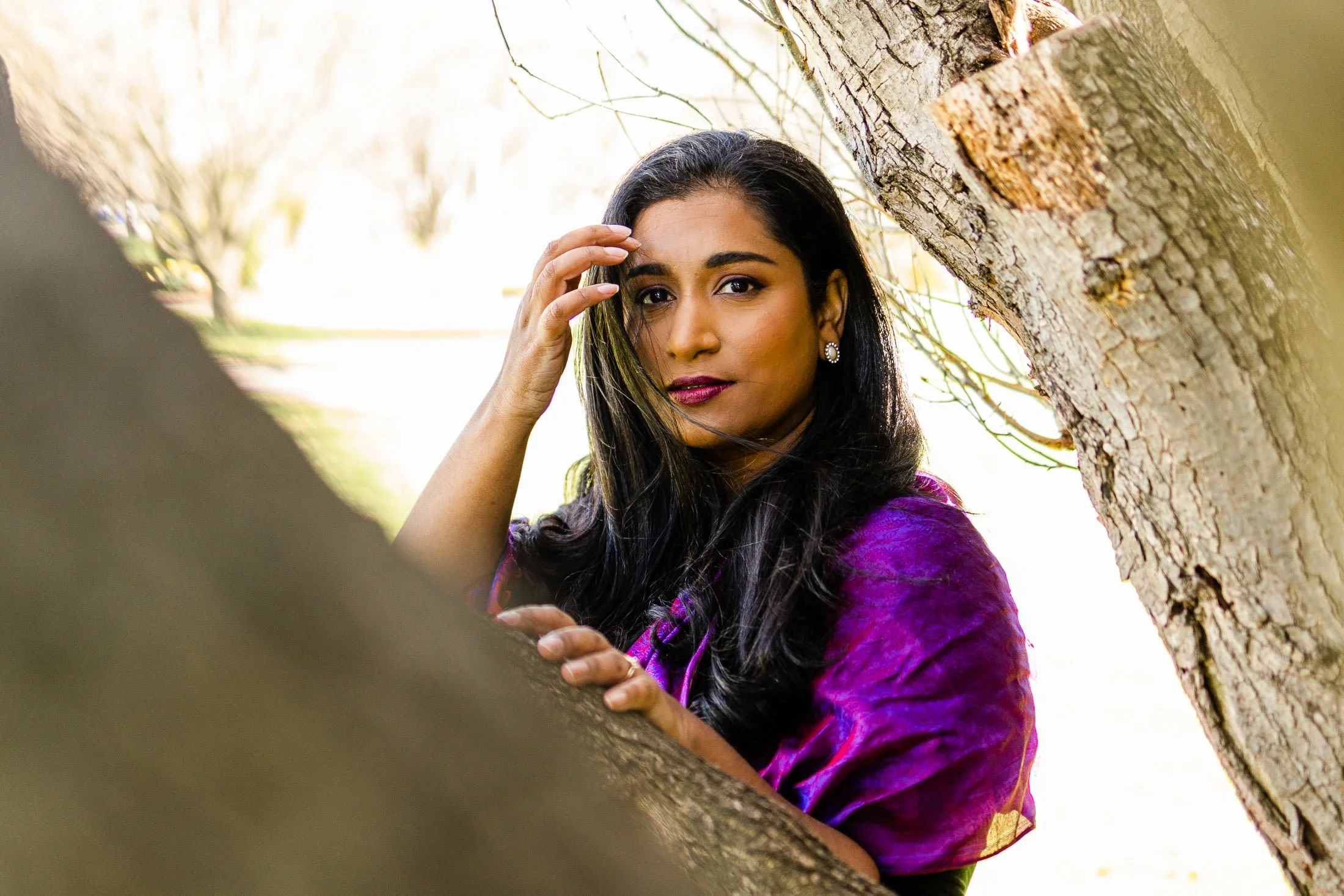
Photo of Anuja Varghese
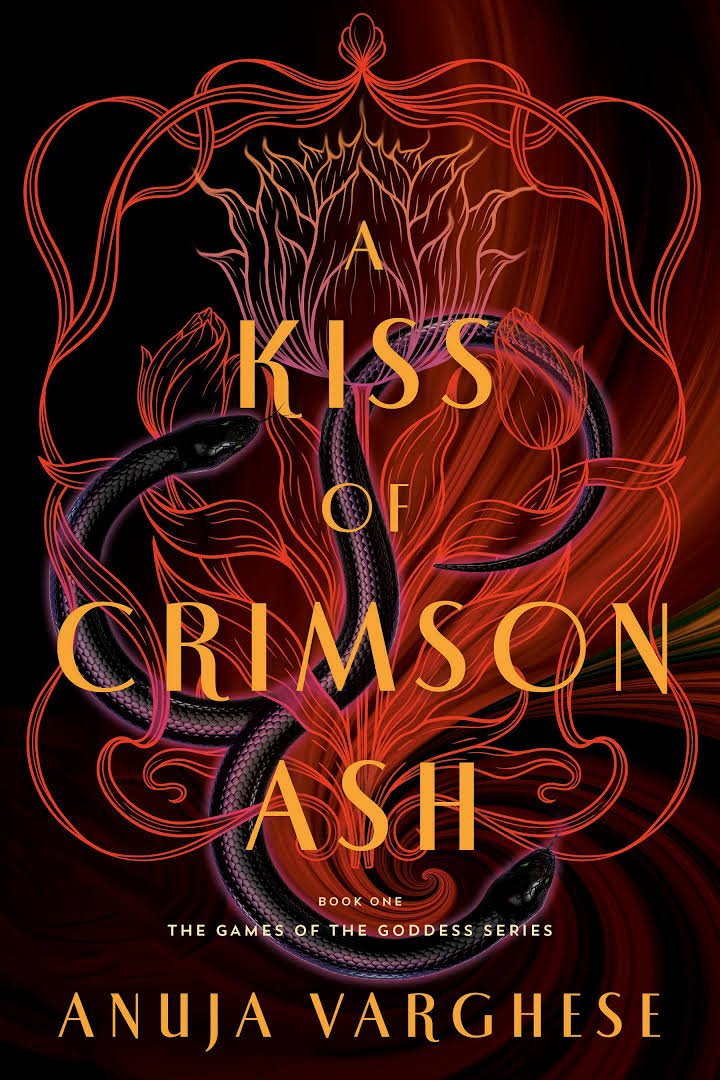
A Kiss of Crimson Ash (Penguin Random House, 2026)
Anuja Varghese (she/her) is an award-winning writer based in Hamilton, ON. Her work has appeared in several literary magazines and anthologies, and she is the Fiction Editor at the Ex-Puritan. In 2023, Her short story collection, titled CHRYSALIS, won the Writers Trust of Canada Dayne Ogilvie Prize and the Governor General’s Literary Award for Fiction, and in 2024, was longlisted for the Carol Shields Prize for Fiction. Her debut novel, A KISS OF CRIMSON ASH, the first in a new fantasy trilogy inspired by medieval India, is forthcoming in spring 2026. Find Anuja online at anujavarghese.com.
Why did you start writing?
I have been scribbling something for as long as I could hold a pencil! There has always been a pull to writing – but for a long time, I thought it would be just for fun. I wrote a lot of anonymous fanfic (full disclosure: I still do!). I only started writing more seriously, or intentionally, when I ended up losing a job very suddenly. That left me in this moment of “well, shit… now what?” That’s when I started sending work out to magazines and contests, I enrolled in a creative writing program, started connecting with the writing community, and found excellent mentors. It was through all those things that I started honing my writing voice and figuring out what kind of stories I wanted to tell.
How has your approach to writing changed since publishing Chrysalis?
From a practical standpoint, I have had to become a bit more disciplined. I’m very fortunate to have a 3-book deal for the medieval India-inspired fantasy series I’m working on, but that also means I have deadlines! I do treat it more like a job now than I did before. On the other hand, from a creative standpoint, my approach is similar to what it’s always been: find the heart and the voice of the characters and write into that, and write where the energy is.
Shame is a theme in a few of your stories, especially with regards to the sexuality of your characters. Do you feel in writing so candidly about sexuality you are fighting a kind of ignorance or attempt at control that pervades culture?
With Chrysalis, I wanted to reflect my own experiences as a queer brown woman, and also the experiences I have seen brown and queer friends and family and lovers and colleagues go through – and unfortunately, shame, or hiding parts of who we are, is a common thread. I also wanted to reflect queer joy and desire without shame. There is something empowering about that. Ultimately, these stories are not an attempt to fight those who would shame or control us. These words are not for them. These words are for anyone who has felt the need to hide, or who has never seen themselves reflected as powerful, beautiful, sexy, happy. These stories are for them. I hope these stories say, “I see you.”
What do you love to do when you aren’t writing?
I love traveling (or at least, planning imaginary travels). My kids also just got into D&D and I’ve been having fun playing with them! I live in Hamilton where we have a very cool arts scene, and I love getting out to different arts events in the city. I have a lot of friends who are different kinds of artists – other writers, or visual artists, or musicians, or actors, and it’s always inspiring to me to spend time with them and see their work. And in an unapologetic writerly cliché, I do love curling up with a cat, a coffee, and a good book!
What advice do you wish you had been given when you started a career as a writer?
When I was first sending stories out into the world, I got a bit caught up in writing what I thought the most people wanted to read, or what I thought was most likely to get published. Those stories weren’t very good. I wish I had realized sooner that you can only control what you create. All the other stuff – whether people like it or read it or publish it – is not within your control. So, create whatever feels fun and exciting and important and true to you. And trust that your words will find the readers they were meant for.
How does writing a collection of short stories differ from writing a novel?
Scope! Each short story is its own small world, and it has to be very contained in the span of a very limited number of words. In writing a novel – there is so much more room to build and play and describe. I also never outlined my short stories. Typically, I knew where the story would end and then just worked backwards, trying to figure out what got my characters to that final moment, feeling, decision, line of dialogue, etc. For the novel, especially because it’s a multi-POV fantasy novel, I had to start with an outline. It functions a bit like scaffolding for the book – to lend a bit of structure and direction to the plot, which I can then fill in with all the fun details, description, and dialogue.
What are the most memorable interactions you’ve had regarding your work (good or bad)?
I’ve been lucky to have far more good interactions with readers than bad ones! Although, I’ve certainly done a few book clubs where readers were not a fan of Chrysalis, or were not a fan of short stories in general – but it’s a good opportunity to say, “It’s okay not to like every story! I’m glad you read something out of your comfort zone.” I’ve had readers tell me that my stories inspired them to write their own stories, to write the stories they have been afraid to tell. I’ve also done a lot of events across Canada, sometimes in smaller cities/towns, and there have been several times where queer folks or brown folks will come up to me afterwards – sometimes it’s a teen or university student, sometimes it’s an older person – and they’ll talk about how they’ve never seen characters like this – like them – in a book before. A real book, that won awards! It makes people feel seen and validated in this meaningful way and that has been one of the greatest rewards of sharing this book.
Seeing as you have written stories that are retellings of traditional fairytales/folktales, how do you choose the stories you want to retell? What do you see within these stories?
I love fairytales, but traditionally, they don’t tend to center people who look like me. Chrysalis has a re-telling of a Cinderella story, but the main character is a brown girl who works at the mall. There is something really fun for me in taking these stories and characters and happily-ever-after endings that feel so familiar to us, and subverting them in ways that diversify and complicate the fairytale space. The book also brings in other kinds of magical creatures – goddesses and ghosts and shapeshifters and figures like the vetala (a creature from Hindu mythology, who became demonized through British translations and later, became the precursor to Stoker’s Dracula and our modern conceptions of the evil vampire). What’s interesting to me about these kinds of characters is exploring what makes them monstrous/the “other” and giving them new possibilities on the page. I love the idea of a monster with a tender heart.
How do you plot out a story? Are there any specific tools/techniques that you use?
For the novel – I created a detailed chapter by chapter outline, showing which character POV we’re in and the major plot points that need to happen. It’s color coded! I love it!
What do you love most about your upcoming novel, A Kiss of Crimson Ash?
I started writing AKOCA when Chrysalis was out on submission and I thought nobody wanted it (it just goes to show you never know who is reading your work and when things are about to change!). But I was reading a lot of fantasy and really looking for a book with three elements: 1) That big, epic fantasy world; 2) Main characters who look like me; and 3) Romance with some real spice. I just couldn’t find something that had all three… so I wrote it! That combination of elements is something I really love and I hope readers will love too. The book is also inspired by my love for D&D and Bollywood and I hope those influences are as fun to read as they were to write!
“It was through all those things that I started honing my writing voice and figuring out what kind of stories I wanted to tell.”